 Admin
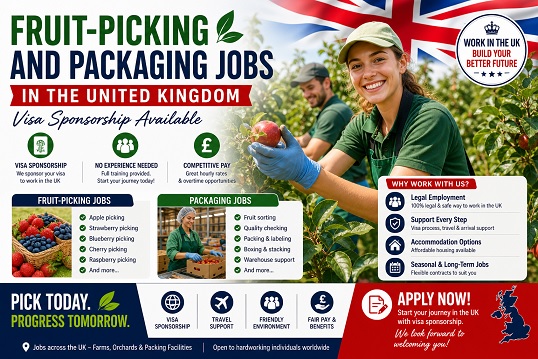
AdminFruit-picking and packaging jobs in the United Kingdom are among the most accessible entry-level employment opportunities for foreign workers seeking legal migration pathways through seasonal agricultural work visas and employer-sponsored recruitment programs. These roles are concentrated in the UK’s horticulture and food production sector, which depends heavily on migrant labour during peak harvest seasons for strawberries, apples, raspberries, cherries, and greenhouse vegetables. This guide provides a deep, structured breakdown of:
- Seasonal agricultural visa routes
- Types of fruit-picking and packaging jobs
- Salary expectations and overtime structure
- Employer sponsorship system
- Recruitment agencies and hiring channels
- Application requirements and documentation
- Embassy verification process
- Transition pathways to long-term residence
Overview of the UK Agricultural Labour System
The United Kingdom relies on foreign seasonal workers due to persistent labour shortages in agriculture and food supply chains.
Key regulatory and immigration bodies include:
- UK Home Office
- Department for Environment, Food & Rural Affairs
- Gangmasters and Labour Abuse Authority
These institutions regulate employment standards, seasonal visas, and worker protection.
What Are Fruit-Picking and Packaging Jobs?
Fruit-picking and packaging jobs fall under seasonal agricultural employment, typically involving manual labour during harvesting and post-harvest processing.
1. Fruit Picking Roles
Workers are responsible for:
• Harvesting fruits from farms and orchards
• Sorting produce in the field
• Handling crates and storage bins
• Quality selection based on size and ripeness
Common crops include:
• Strawberries
• Apples
• Blueberries
• Raspberries
• Cherries
• Grapes
2. Packaging and Processing Roles
Packaging workers operate in farms, warehouses, and food processing facilities:
• Washing and sorting fruit
• Packing produce into boxes
• Labelling and sealing packages
• Quality control inspection
• Cold storage handling
These roles often take place in indoor facilities and greenhouses.
UK Seasonal Worker Visa – Legal Pathway for Foreign Workers
The primary legal route is the UK Seasonal Worker Visa, administered by:
- UK Home Office
Key Features:
• Valid for up to 6 months
• Employer-specific
• Renewable annually (limited cycles)
• Designed for agricultural work only
This visa replaced older temporary agricultural schemes.
Salary Expectations for Fruit-Picking and Packaging Jobs (2026)
UK agricultural wages are typically based on the National Minimum Wage or National Living Wage standards.
Estimated Pay Structure
| Job Type | Hourly Wage (GBP) | Monthly Estimate | Overtime |
|---|---|---|---|
| Fruit Picker | £10.42 – £12.50 | £1,600 – £2,000 | Yes |
| Packaging Worker | £10.50 – £13.00 | £1,700 – £2,200 | Yes |
| Greenhouse Worker | £10.50 – £12.80 | £1,600 – £2,100 | Yes |
| Supervisor | £12.50 – £15.00 | £2,000 – £2,600 | Yes |
Overtime rates may increase earnings by 20%–40% during peak harvest periods.
Major Employers Hiring Foreign Agricultural Workers
Large UK farms and agribusinesses often recruit through approved schemes:
- Berry Gardens
- Haygrove Ltd
- Pro-Force Limited
- AG Recruitment and Management
These organizations recruit seasonal workers from Africa, Asia, and Eastern Europe.
Step-by-Step Application Process
Step 1: Apply Through Approved Recruitment Agency
Only licensed UK operators can recruit seasonal workers.
Examples:
• Pro-Force Limited
• AG Recruitment
• Concordia UK
Step 2: Receive Certificate of Sponsorship (CoS)
Employer issues CoS after selection.
This document is required for visa application.
Step 3: Apply for Seasonal Worker Visa
Submit application through:
- UK Home Office visa portal
Requirements:
• Valid passport
• CoS reference number
• Proof of funds (if required)
• Tuberculosis test certificate (for eligible countries)
Step 4: Biometrics and Embassy Processing
Applicants attend visa application centres for:
• Fingerprinting
• Photograph capture
• Document verification
Step 5: Travel and Work in the UK
Once approved:
• Worker travels to UK
• Employer provides job placement
• Accommodation is often arranged on-site
Application Requirements Checklist
| Requirement | Mandatory | Notes |
|---|---|---|
| Valid Passport | Yes | Minimum 6 months validity |
| Certificate of Sponsorship | Yes | From approved employer |
| Seasonal Worker Visa Application | Yes | Online submission |
| TB Test Certificate | Yes (selected countries) | Required before visa |
| Proof of Funds | Sometimes | Depends on employer |
| Police Clearance | Sometimes | Not always required |
Employment Conditions and Worker Rights
Foreign agricultural workers are protected under UK labour laws:
• Minimum wage compliance
• Safe working environment
• Maximum working hour regulations
• Access to grievance reporting via GLAA
- Gangmasters and Labour Abuse Authority
Employers cannot legally confiscate passports or charge illegal recruitment fees.
Housing and Living Conditions
Most farm employers provide:
• Shared accommodation near farms
• Utility-inclusive housing
• Transport to work sites
Typical deductions:
| Item | Cost per Week |
|---|---|
| Accommodation | £50 – £80 |
| Transport | £10 – £20 |
| Utilities | £10 – £15 |
Pathway to Long-Term Employment or Residency
Fruit-picking jobs are not direct pathways to permanent residence, but they can lead to:
- Repeat seasonal contracts
- Transition to skilled agricultural roles
- Sponsorship under Skilled Worker visa (rare cases)
- Experience-based migration opportunities
However, long-term settlement requires switching into higher-skilled immigration routes.
Common Recruitment Scams to Avoid
- Fake UK visa offers without CoS
- Agencies demanding high upfront fees
- Non-registered recruitment agents
- Job offers without employer verification
- False promises of permanent residency
Always verify through official UK government portals.
Embassy Verification Process
Applicants must verify visa legitimacy through:
- UK Home Office
Visa officers check:
• Employer license validity
• CoS authenticity
• Financial and identity documents
• Previous immigration history
Regional Demand for Agricultural Workers in the UK
High-Demand Agricultural Regions
| Region | Main Crops | Job Availability |
|---|---|---|
| Kent | Apples, cherries | Very High |
| East Anglia | Strawberries, vegetables | High |
| Scotland | Soft fruits | Moderate |
| Wales | Livestock + mixed farming | Moderate |
| South West England | Dairy + horticulture | High |
Income Optimization Strategy
Workers can increase earnings by:
• Taking overtime shifts during peak harvest
• Working night sorting shifts
• Moving between farms seasonally
• Staying full contract duration
Peak harvest months (May–September) generate highest income potential.
Cost of Living Analysis
Estimated Monthly Expenses
| Expense | Cost Range |
|---|---|
| Accommodation | £200 – £350 |
| Food | £150 – £250 |
| Transport | £50 – £120 |
| Miscellaneous | £80 – £150 |
Savings potential is higher when accommodation is subsidized.
Immigration Risks and Compliance Issues
- Overstaying seasonal visa
- Working outside approved employer
- Using fake recruitment agencies
- Violating accommodation rules
- Misrepresentation in application
Violations can result in multi-year UK entry bans.
Frequently Asked Questions (FAQs)
1. Can fruit-picking jobs lead to permanent residency in the UK?
No direct pathway exists, but experience may help transition into skilled visas.
2. Do I need experience to apply?
No. These are entry-level jobs.
3. Is accommodation provided?
Most approved employers provide shared housing.
4. Can I extend my seasonal visa?
Extensions are limited; most workers return annually if re-selected.
5. How long is the visa valid?
Typically up to 6 months per season.
Worker Testimonies
1. Grace – Strawberry Picker (Kent)
“The job was physically demanding but stable. Accommodation was close to the farm.”
2. Ahmed – Packaging Worker (East Anglia)
“I worked full harvest season and saved more than expected due to overtime.”
3. Blessing – Greenhouse Worker
“The recruitment agency handled everything transparently after verification.”
4. Samuel – Apple Picker
“The UK system is strict, but once inside, working conditions were fair.”
5. Mary – Soft Fruit Worker
“I returned for a second season after a positive first experience.”
Final Conclusion
Fruit-picking and packaging jobs in the United Kingdom provide:
• Legal seasonal employment
• Structured visa access
• Fair wage protection
• Entry-level migration opportunity
However, they are temporary pathways, not direct routes to permanent residency.
For long-term settlement, workers must transition into skilled immigration routes under UK visa law.


 Admin
Admin